2026 Buying Guide: How to Choose the Best GaN Fast Charger
Wattage breakdown, GaN semiconductor technology, USB Power Delivery 3.1, PPS protocols, and safety standards.
Thomas Laurent - Expert Matériel
Senior Tech Editor
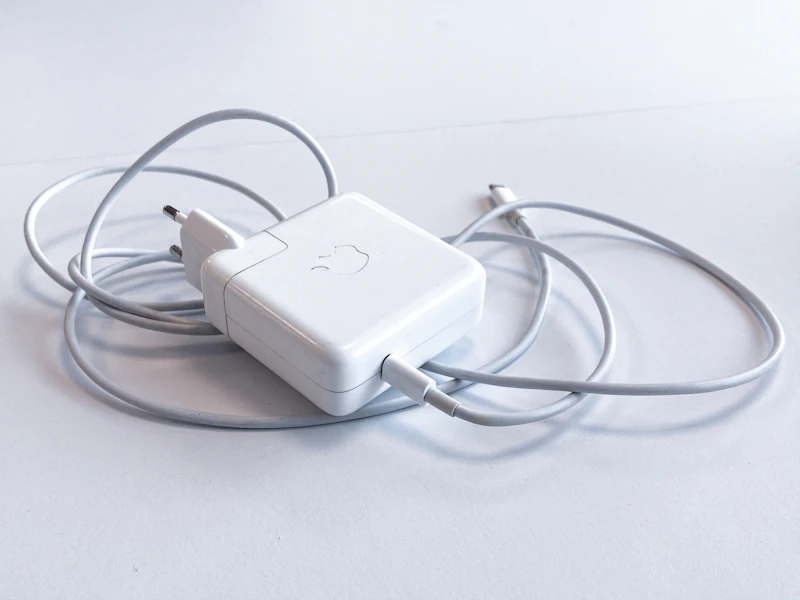
Ever since major phone manufacturers stopped bundling power adapters in product boxes, selecting a high-quality external charger has become an essential buying decision. In 2026, fast charging is no longer a luxury gimmick—it is the backbone of our daily personal tech ecosystem. To power a laptop, flagship smartphone, handheld gaming console, and wireless earbuds without carrying a bag full of heavy, overheating bricks, one semiconductor technology has emerged as the definitive gold standard: Gallium Nitride (GaN).
💡 Key Takeaways at a Glance
- GaN Technology: Delivers energy efficiency above 95%, shrinking charger footprints by 40% to 60% while generating significantly less heat than legacy silicon.
- USB-PD 3.1 Standard: Supports power levels up to 240W via Extended Power Range (EPR) profiles.
- PPS Protocol: Required for maximum fast charging speeds on Samsung Galaxy (45W Super Fast Charging 2.0) and Google Pixel devices.
- Cable Requirement: Charging above 60W (3A) mandates a certified 5A USB-C cable equipped with an embedded E-Marker chip.
1. Silicon vs Gallium Nitride (GaN): The Semiconductor Evolution
For more than four decades, Silicon (Si) reigned supreme as the universal semiconductor material for power electronics. However, silicon has reached its physical limits. As switching frequencies and power throughput increase, energy losses in the form of waste heat escalate dramatically. Traditional silicon chargers turn a significant portion of incoming AC power into useless thermal energy, requiring bulky aluminum heat sinks and large plastic enclosures.
Gallium Nitride (GaN) belongs to the Wide Bandgap (WBG) family of semiconductors. Because electrons travel up to 1,000 times faster through its crystal lattice compared to silicon, GaN offers groundbreaking electrical performance:
- Superior Energy Efficiency (95%+ to 98%): Very little power is lost as heat when converting 110V/230V AC wall current into DC USB power (5V to 48V).
- High-Frequency Switching: GaN ICs switch millions of times per second, allowing internal transformers and capacitors to be dramatically scaled down.
- Unmatched Portability: At identical wattage outputs (e.g., 100W), modern GaN chargers are 50% smaller than legacy silicon power bricks.
In 2026, 3rd and 4th generation GaN architectures integrate the PWM controller, gate driver, and GaN FET onto a single monolithic die, pushing power density past 1.5 Watts per cubic centimeter.
2. Demystifying Specifications: Watts, Volts, Amperes & Protocols
A charger's total output is measured in Watts (W), calculated using Ohm's law: Power (Watts) = Voltage (Volts) × Current (Amperes).
However, fast charging is not simply pushing raw electricity down a wire. The power adapter and connected client device execute a real-time digital handshake to agree on the highest safe charging profile.
The Universal Standard: USB Power Delivery 3.1 (USB-PD)
USB-PD is the open standard specified by the USB Implementers Forum (USB-IF). While PD 3.0 capped out at 100W (20V / 5A), USB-PD 3.1 Extended Power Range (EPR) introduces higher fixed voltage steps to meet the demanding requirements of gaming laptops and mobile workstations:
| Voltage Profile | Max Current | Power Output | Target Devices |
|---|---|---|---|
| 5V / 9V | 3A | 15W - 27W | Smartphones, earbuds, smartwatches |
| 15V / 20V | 3A to 5A | 45W - 100W | Tablets, MacBook Air, Ultrabooks |
| 28V (PD 3.1) | 5A | 140W | MacBook Pro 16", High-performance laptops |
| 36V / 48V (PD 3.1) | 5A | 180W - 240W | Mobile workstations, High-end gaming laptops |
The Dynamic Protocol: PPS (Programmable Power Supply)
PPS is a vital optional extension of USB-PD. Instead of locking into fixed voltage steps (like 9V or 15V), PPS allows the device to request fine-grained voltage adjustments in real time in 20 millivolt (0.02V) increments.
This is crucial because internal battery resistance changes constantly during a charge cycle. By continuously matching the exact voltage the battery needs, PPS prevents excessive heat generation inside the phone's internal charging IC. PPS support is required to trigger Samsung's 45W Super Fast Charging 2.0 and peak speed charging on Google Pixel devices.
3. 3 Essential Selection Criteria for 2026
1. Match Wattage to Your Most Demanding Device
Choose your primary charger based on your most power-hungry device:
- 30W to 45W (Ultra-Compact Nano Bricks): Ideal for users who only travel with a smartphone, tablet, and wireless earbuds.
- 65W to 100W (The Universal Sweet Spot): The ideal all-in-one sweet spot for fast charging a MacBook Air or XPS laptop alongside a flagship phone.
- 140W to 200W+ (Desktop Multi-Port Hubs): Designed for power users, video editors, and gamers with high-wattage laptops and multiple concurrent devices.
2. Evaluate Multi-Port Power Allocation Matrices
Never fall for marketing headlines alone! When a charger is advertised as a "100W 4-Port GaN Charger," 100W is the total combined output capability of the internal transformer, not what every port delivers simultaneously.
Typical Power Split on a Quality 100W 3-Port Charger (2x USB-C + 1x USB-A):
- Single USB-C Connected: Full 100W output (ideal for MacBook Pro 16").
- Two USB-C Connected: Smart split into 65W (Laptop) + 30W (Phone).
- All Three Ports Connected: Split into 45W (Laptop) + 30W (Phone) + 18W (USB-A for earbuds).
3. Verify Cable Rating and E-Marker Chips
Even the best GaN power adapter will be severely bottlenecked if paired with a sub-par cable. Per USB-IF specifications, standard USB-C cables without specialized identification chips are capped at 3 Amperes of current (60W max at 20V).
To charge above 60W, you must use a certified 5A USB-C cable containing an embedded E-Marker (Electronic Marker) chip inside the connector housing. This chip verifies to the charger that the cable's copper gauge can safely carry up to 5A of current without overheating.
4. Frequently Asked Questions (FAQ)
❓ Will a 100W GaN charger damage a smartphone that only supports 20W?
No. Power is drawn by the client device, not forced by the power adapter. Through USB Power Delivery negotiation, the smartphone requests only the exact voltage and current profile it is designed to accept (e.g., 9V / 2.22A = 20W).
❓ Why does the charger briefly disconnect when plugging in a second device?
This brief pause is normal behavior known as dynamic power reallocation. The internal power management IC momentarily interrupts power to renegotiate safe voltage levels with all connected devices simultaneously.
❓ Does fast charging degrade my phone's battery health faster?
Heat is the primary enemy of lithium-ion battery longevity. Modern GaN chargers paired with PPS protocol minimize internal heat build-up. Furthermore, peak wattage is only delivered from 0% to 50%; past 80%, the charger automatically throttles speed down to trickle charge mode to preserve battery chemistry.
Thomas Laurent
✔️ Senior Hardware Expert & Editor-in-ChiefIndependent tech journalist and hardware reviewer with over 8 years of experience evaluating semiconductor power supplies and consumer electronics. Thomas utilizes USB electronic load testers and oscilloscopes to analyze voltage ripple stability and energy efficiency.
Thomas Laurent
✔️ Expert MatérielTech specialist with over 8 years of hands-on product testing and hardware analysis experience. Independent editor for DealFyno.